Yesterday is over. Tomorrow is yet to come. Today is still unknown.
Let’s live today — Our Unwritten Seoul, Episode 5.
In my previous episode, I shared how I first got into K-dramas, but I didn’t elaborate on just how fundamental they’ve become in my life to this day.
My first show was Descendants of the Sun, back in 2016, featuring the iconic SongSong couple (Song Hye-Kyo and Song Joong-Ki — formerly married, now divorced). That show was my awakening. Since then, I’ve watched over 300 K-dramas with ease.
What drew me most to K-dramas—besides the fact that they are primarily written by women, for women—was the rare satisfaction of closure. For the first time in my life, I experienced the comfort of knowing that a story would have an ending. It might be happy, sad, disappointing, or brilliant—but it ends.
Unlike the American TV shows I was used to, which often drag on endlessly, K-dramas usually tell a complete story within a limited number of episodes. Most run from 6 to 20 episodes, with 16 being the standard. Some go up to 50 or more episodes, especially family dramas or weekday soaps. Rarely do K-dramas have a second or third season. Although with the rise of OTT platforms, there’s been more push to extend successful shows—as seen with Squid Game—I’ve never seen more than three seasons. And even then, each season is usually just 12 episodes or fewer.
As someone who stuck with Grey’s Anatomy for over 15 years—endlessly chasing new tragedies and shocking twists—discovering this format was a breath of fresh air. No matter how emotional a drama’s ending was, I could move on, process it, and start something new. In contrast, I can hardly remember finishing many Western series. They either drag on until they lose all momentum or I just lose interest entirely. With the rare exception of shows like Succession or Bridgerton.
To me, K-dramas are joy, sorrow, and solace.
Jeanie Y. Chang, better known as Noona’s Noonchi, is a Korean-American therapist who often speaks online about how K-dramas can support mental health. Many people scoff at this. How can TV shows have such an impact? But everything we consume—whether books, movies, or series—affects us. And for some of us, a K-drama can be a lifeline.
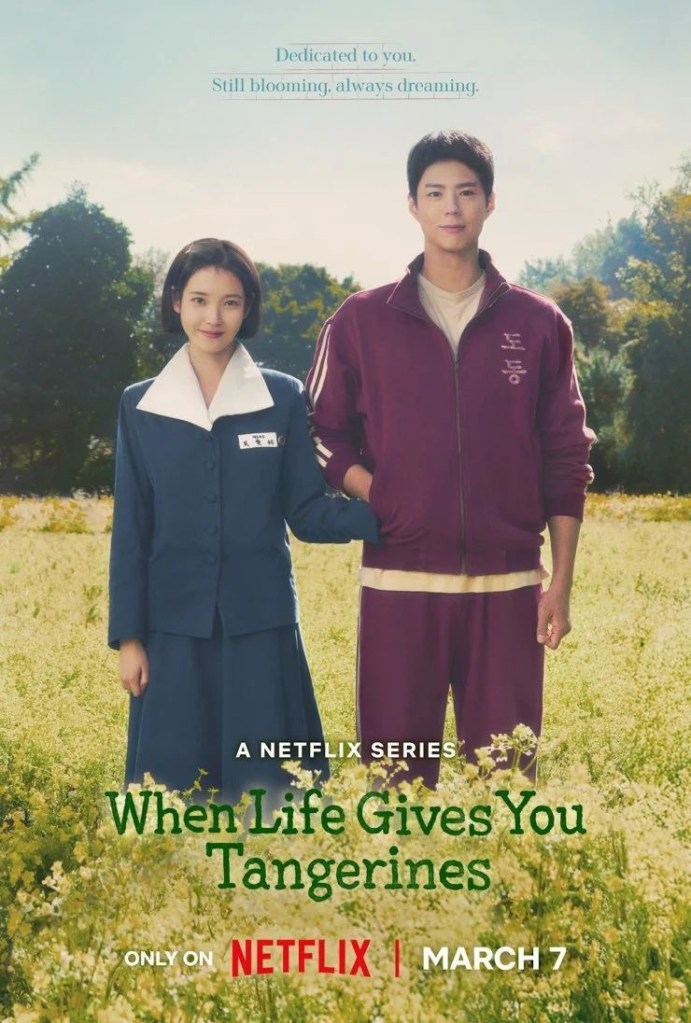
From slice-of-life dramas like When Life Gives You Tangerines (2025) or My Liberation Notes (2022), which explore the everyday struggles of ordinary people—love, loneliness, family, death—
to makjang dramas with outrageous, over-the-top storylines like Money Flower (2017) or Love (ft. Marriage and Divorce) (2022),
Every single one has helped me in some way.
Even those considered “not good enough”—like Do Do Sol Sol La La Sol (2020)—had their place. Yes, it had plot holes. But at that moment in my life, it was the escape I needed. Sometimes, just waiting weekly for the next episode is enough to keep going, enough to survive.
And on some days, just surviving is enough.
I’ll soon share a beginner’s guide to help you start your own K-drama journey.
In the meantime, take care — and have a wonderful day. 💛
 malynevimuse
Laisser un commentaire